Chainlink Overview: The world of smart contracts
The Chainlink network is able to take any input, package it in the form of LINK and then conduct the smart contract. If the smart contract requirements are fulfilled, then the output will be a conversion of the packaged LINK into any output desired. Making this a bit easier to understand LINK, allows token transfers to contain a data payload.
Chainlink Overview
If you are familiar with the current landscape of cryptocurrency, then you most likely know that one of the most appealing characteristics of cryptocurrencies and blockchain technology is the ability of some is to create smart contracts. From a business standpoint, this capability is proving to be extremely valuable. Any cryptocurrency that can take smart contract capability and seamlessly integrate it into existing systems to create more efficient and robust networks stands to have success for the foreseeable future.

A project that fits this criteria is Chainlink. Chainlink and it’s LINK token is a cryptocurrency and blockchain that helps to not only create and verify smart contracts on blockchains but also connect the world in a way that was previously impossible. Chainlink lives up to its name by connecting multiple types of systems with blockchain technology to solve real-world problems.
Chainlink could very well become a major part of our future in both technology and blockchain, as well as how the blockchain is integrated into our existing solutions. If you want to learn more about Chainlink and how it is positioned to change the landscape of blockchain technology in business and administration, then you’re in the right place. This overview will go over some of the most important aspects of Chainlink, what makes it unique, the token used on the network, and the future prospects of Chainlink.
Chainlink Smart Contracts
The killer app feature behind Chainlink and the LINK token is the capability to receive and deliver assets through it using any input and output.
A little technical overview of what LINK offers
The LINK token is an ERC677 token, ERC677 tokens inherit their functionality from the ERC20 token standard, ERC20 is the technical standard used for all smart contracts on the Ethereum blockchain. ERC677 is an upgrade in functionality to the ERC20 introducing a transferAndCall function to the ERC-20, while still being backward compatible, which other versions of the token standard are not. This backward compatibility adds to the ERC20 standard in providing a safe way for new contracts to transfer tokens to external contracts. Making this a bit easier to understand LINK, allows token transfers to contain a data payload.
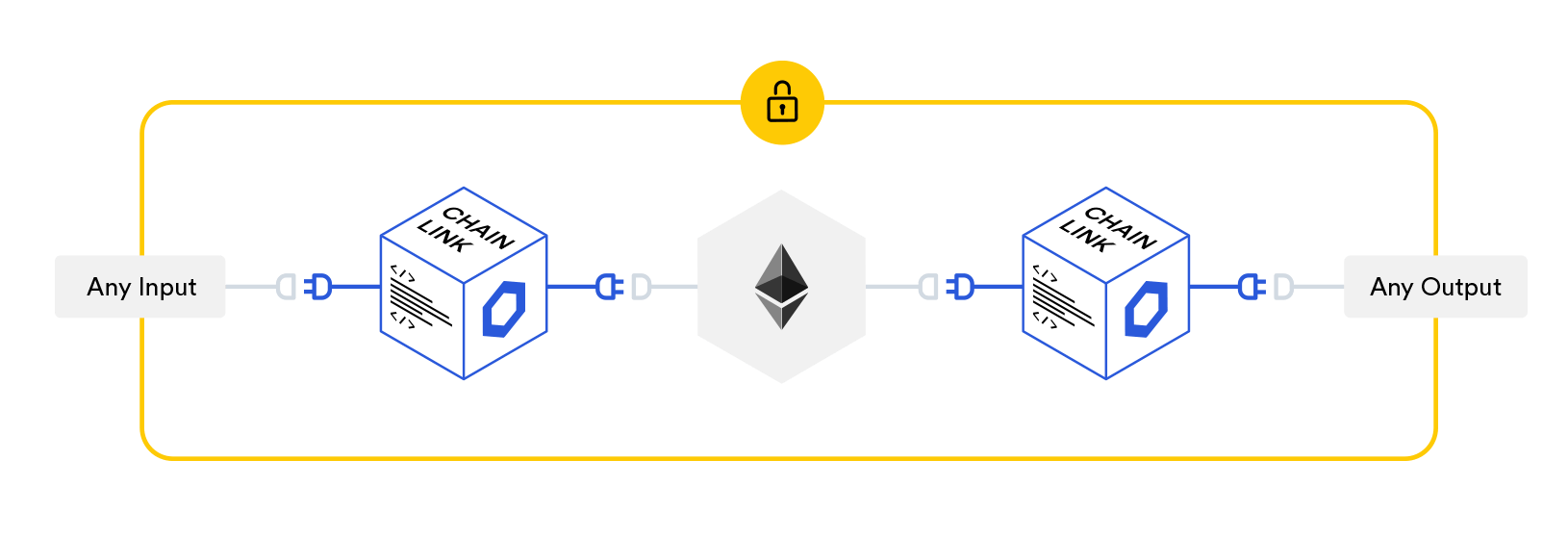
The Chainlink network is able to take any input, package it in the form of LINK and then conduct the smart contract. If the smart contract requirements are fulfilled, then the output will be a conversion of the LINK into any output desired. The input and output of this diagram is the key. Smart contracts can’t normally access the input and output data on their own. If a developer wants to implement a chosen smart contract, there is a connectivity problem.
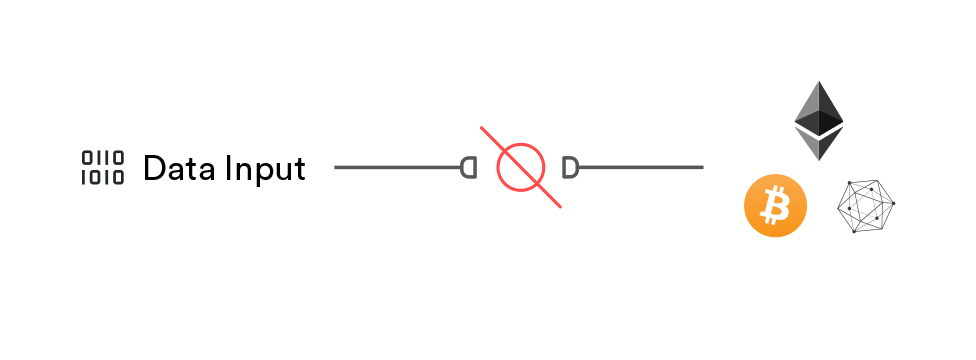
The smart contract can not connect with external resources such as off-chain data and APIs without the use of specialized software called oracles, which is a potential single point of failure. Chainlink changes this by extending the network functionality, providing similar security guarantees as a smart contract. This is accomplished by allowing multiple Chainlinks to confirm data before it becomes a trigger; there is an elimination of any one point of failure.
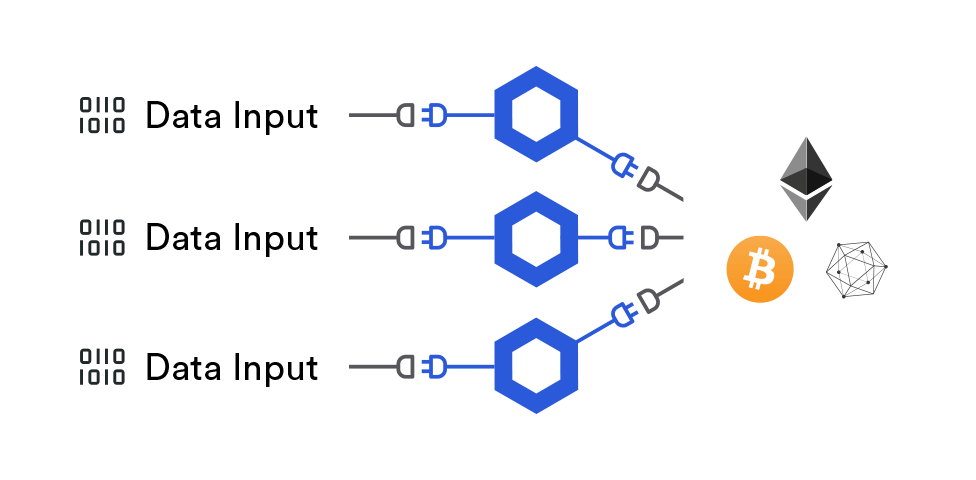
This maintains the overall value of a smart contract that is highly secure, reliable, and trustworthy in both the input and output stage.
What is Chainlinks’ token LINK?

If you want to truly understand Chainlink and more importantly, if you wish to invest in the future success and application of Chainlink, then you will need to know more about LINK. LINK is the token that is native to the Chainlink network and it is the preferred currency of the Chainlink network. Chainlink’s aim is to provide innovative and proprietary functionality to blockchain networks and existing technologies around the world. To power this expansive network, node operators are needed. To provide value to the LINK token, node operators are compensated in the form of LINK tokens.
One important thing to know about the LINK token is that the Chainlink network has built-in features that are designed to give the LINK token more value and protect the investment that you make in LINK. The demand and price of a LINK token is directly tied to the number of users that are on the LINK platform. This incentivizes people to buy and hold LINK tokens, as more and more people, businesses, technology, and networks use the platform.
In addition, another feature included in the Chainlink network is those node operators that hold more LINK tokens are more likely to receive both larger and more valuable contracts from the network. With this system, people are then directly financially incentivized to hold as much LINK as possible, because it gives them a great chance at earning more, by being involved in the Chainlink network.
With plenty of incentives to hold LINK on the Chainlink network and a bright future for the use-case of Chainlink, it is generally considered a good token to hold, and one that in turn brings an added value to the network. Like any blockchain currency, LINK is transacted easily, securely, and for a nominal fee.
Chainlink Nodes and Staking
Similar to bitcoin miners, those that use their processing power and supply LINK tokens to enable the Chainlink network to function are able to earn more LINK tokens. These facilitators are called “Nodes.” The LINK token is used to pay node operators for retrieving data for smart contracts and also for deposits placed by node operators as required by contract creators. Setting up a node is quite easy, and more information about this process can be found (here).

As a node operator, we could not find data to state the kind of profits possible providing service to the network but comparing it to Ethereum node operators, an Ethereum 2.0 validator can expect to earn from 4.6% to 10.3% as rewards for staking on an annual basis. When this is added to the increase in the value of the LINK coin it is quite lucrative.
Those that wish to stake their LINK allowing it to be used for the fulfillment of smart contracts, as of July 2020, are being paid a return of 0.44%, this is up from just 0.116% a month prior.
What Makes LINK Unique?
Chainlink is a very unique project; on its surface, it may appear that Chainlink tries to tackle a problem that has already been solved; however, Chainlink is more sophisticated than first thought. For years, we have known that one of the most appealing aspects of cryptocurrency and blockchain networks is the ability to create and execute smart contracts. There are now dozens of cryptocurrency projects that aim to do this. However, what many blockchain smart contract projects have failed to realize is that the ability to integrate these projects into everyday life as well as existing technology systems is equally, if not more important, to be both useful in practice and successful for adoption.
Creating smart contracts is great, but when these contracts are unable to communicate with any other technology that already exists, they are nearly useless or, at best, are undifferentiated from other smart contracts that have the same limitation. The Chainlink network can bridge the gap between two or more networks or systems to allow businesses and organizations to take full advantage of the fantastic benefits that smart contracts can have on business and industry. The work that Chainlink is doing is providing a way for cryptocurrency and blockchain technology to be introduced to the rest of the world, making it a very unique and valuable project with a lot of potential.
Where Can You Get LINK?
If you want to invest in the success of Chainlink and even participate in the Chainlink network, then you will first need to acquire some LINK, the official token of the Chainlink network. Luckily, LINK is a highly traded coin, and the project has reached a trusted status, being number 15 on the list of coins, where it is listed on many different online exchanges around the world. The largest exchange on which LINK is currently traded on (Coinbase), which provides it with plenty of opportunities for both exposure to the masses as well as everyday investors.
In addition to being listed on Coinbase, LINK can also be found on Binance, the second most used platform, which is the preferred exchange for more advanced investors. This platform is preferable for those that like to trade cryptocurrency pairs as well as a variety of other trading options. Due to the reputable exchanges on which LINK is listed, LINK continues to have a high liquidity and trading volume, both of which are important for the long-term health of any cryptocurrency token.
- link to Binance
How to Store LINK?
Once you obtain some LINK coins, you will need to know how to store them safely. A key component to responsible ownership, use, and storage of any cryptocurrency is knowing how to store it in a way that provides you with both safety and convenience. There are two main things that you can do to store LINK. You can store it on the exchange where you purchase it, or you can download the Chainlink application and store it in a wallet.
Storage on a Custodial Exchange
Initially, keeping your LINK on a crypto exchange may seem like a good idea, it is effortless to access, but that is also part of its fault. The majority of exchanges like CoinBase are considered custodial; you are turning over the safety and security of your assets to a custodian. Even if you plan on trading out of your LINK tokens soon, don’t think of an exchange as a bank, you are in fact handing over the safety and security of your asset to exchanges, but many are not insured and have been hacked and stolen from in the past.
Coinbase’s methods are probably the safest trading platform for the storage of funds. They store 98% of the funds on the platform in a cold wallet (offline storage that is inaccessible to a hacker, more on this later), using paper backups of the keys that are “distributed geographically to safe deposit boxes.” The other 2% is kept online in a hot wallet, and this 2% is insured. Coinbase is the exception in this field. If you consider using another trading platform, be sure to look into their security and their history as a target for hacking. Binance, had 7,000 Bitcoin worth $40 million stolen from it in a hack just last year (Read More). The exchange was able to cover their loss and pay all depositors. Still, it halted both deposits and withdrawals during the investigation, which can also be detrimental and disconcerting for any trader. If you are planning on using your LINK for short-term spot and derivatives positions, then a custodial exchange makes sense, but for others, it is not wise, and we suggest a different storage method.
Decentralized Exchanges
In the last year, we have seen an enormous increase in the number of what are called ‘decentralized exchanges’ (DEXes) or generally referred to as “non-custodial exchanges.” These differ from the traditional custodial exchanges in that you are not turning over your asset. While we don’t know of any DEXes that are currently trading in LINK, since it is one of the fastest-growing tokens, this will probably change. Uniswap and the Kyber Network are DEXes that offer traders strong liquidity as well as anonymity backed by the Ethereum network, currently the number two blockchain network behind Bitcoin: For those spot traders who take positions in either ETH or ERC-20 tokens, these DEXes are one of the best choices for holding assets — being non-custodial, users remain in control of their own assets. As traders start to see the benefits of DEXes they are gradually gaining liquidity and serving a more substantial audience, they offer a non-custodial way to trade relatively large positions that were previously only possible with custodial exchanges. Because of the flexibility of Chainlink and the LINK token, we would not be surprised to see a DEX created with a Chainlink backbone or one that will at least be using LINK as a token for exchange soon.
Wallet Storage
In the cryptocurrency world, a wallet is a software program with its primary function designed to store an investor’s public and private keys. Depending on their complexity, crypto wallets can also monitor their balance, send and receive multiple digital currencies, as well as interact with various blockchains. A cryptocurrency wallet is required to manage crypto assets and, most importantly, keep them secure.
LINK inherits its functionality from the ERC20 token standard, and therefore if you want to hold LINK, any wallet that can handle ERC20 tokens should work fine for this purpose.
As stated before, the two ways to keep crypto assets, including LINK tokens, is with hot or cold wallets.
- Hot wallets are online and can be always be accessed. These include all cloud wallets as well as the majority of mobile and software wallets. Some custodial exchanges (for example Coinbase) take advantage of quasi hot and cold wallets.
- Cold wallets allow the user to store funds offline; funds can be received any time but can not be sent, and thus are safe from hacking until the assets are brought back online. These types of wallets include hardware, like USB drives and other removable media. Cold wallets can be (physical bitcoin) (or their particular cryptocurrency equivalent) and even (paper wallets).
Most LINK holders use both cold and hot wallets for holding their assets. Hot wallets are handy for frequent trading of the LINK token, while cold wallets are better for long-term holding of crypto assets. Having private keys to a wallet gives a cold wallet user the sole responsibility for the safety of tokens. The cold wallet method of storage of LINK also allows for participation in the Chainlink network easily, as well as the operation of nodes; should this be desired.
The Future of LINK
Many in the cryptocurrency community are very optimistic about LINK, both from a token valuation standpoint as well as a technology outlook standpoint. Chainlink is setting out to solve a problem that almost no other coin is addressing, and so far, they are having massive success. Bitcoin brought the idea of an inflation stable, trustless, digital currency, and payment system to fruition. Ethereum upped the capabilities of the blockchain, adding to it smart contracts for the transfer of different kinds of assets.
With Chainlink and the LINK token, the capabilities of the blockchain are further expanding. What was once only the domain of specialized oracles which have their own deficits and potential for security failure is now being provided by the extended capabilities that Chainlink offers. If you are invested in Chainlink or the LINK token either financially or just emotionally, the chances are that you’re going to be happy for the foreseeable future are quite good.
The information on this website is for general information only.
It should not be taken as constituting professional advice from the website owner
Please donate if you enjoyed the content
BTC = 32QCowhefyQsPTaw7kTqC1EdghUziU6sUb