What is Bitcoin and Cryptocurrency in Simple Terms
Bitcoin is a decentralised digital currnecy known as a Cryptocurrency that runs on a Blockchain network. If you want to learn in simple terms what Cryptocurrencies are and how Blockchain Technology enables the use of the Cryptocurrency Bitcoin, this is the blog for you.
Have you ever said to yourself “I want to get into cryptocurrencies, but just do not understand what they are about?”
or
“I have heard of a Bitcoin before, but do not understand how it works at all.”
Well, look no further.This is the blog for you. Not only will I be explaining in simple and easy to understand terms “what is bitcoin”, but I will also explain Cryptocurrencies and Blockchain Technology with a concrete case example for each use.
Do not worry, at first the above bolded-concept sounds complicated, yet with a little bit of reading, and motivation to learn, you will love Cryptocurrency just as much as me after this blog.
- What is Bitcoin?
- What is a Satoshi?
- How Does Bitcoin Hold Value?
- What is Blockchain Technology?
- Does Blockchain make Bitcoin Secure?
- What is a Cryptocurrency?
- Where can I buy Bitcoin from?
- What is Bitcoin Mining?
- Summary
What is Bitcoin?
Bitcoin is comprised of two constructs, a useful large scale computer network similar to the internet known as “Blockchain Technology” and a secure currency format known as “Cryptocurrency”.
Simply put, Bitcoin is a vast network of computers all playing the same token economy game with rules that cannot be changed, unless agreed upon by a majority consensus. In the world of computers CODE is the LAW.
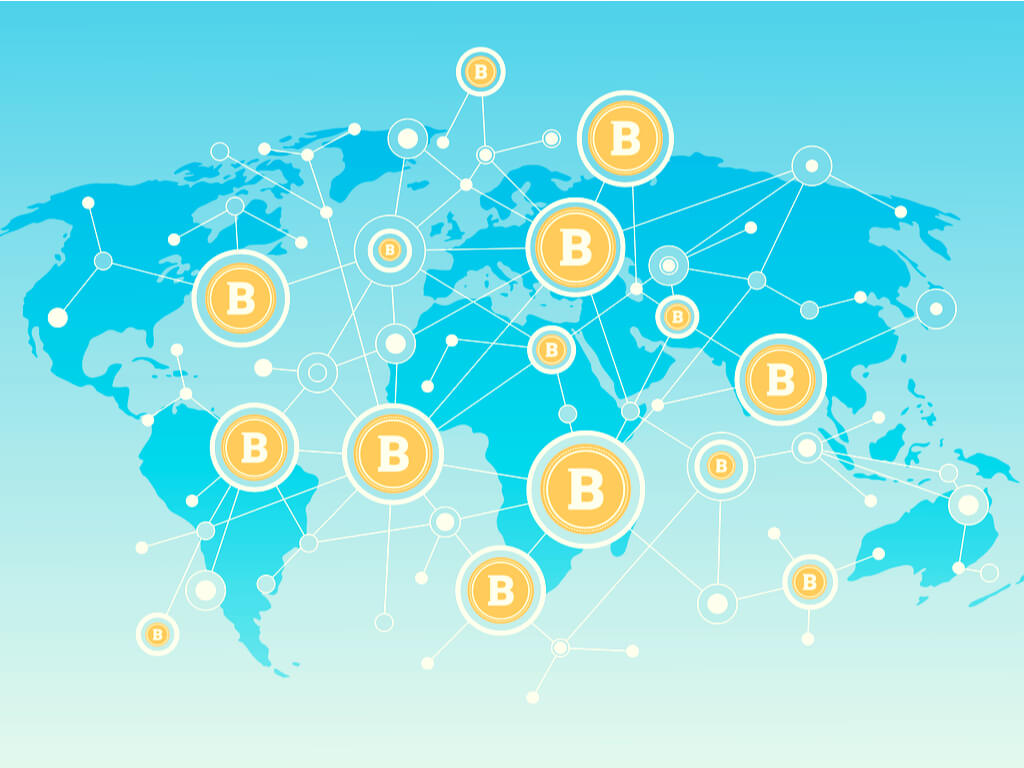
The game has two types of players, people who use Bitcoin just like ordinary money, and those who are playing a lucky dip puzzle-solving game.
Firstly, the lucky dip player is playing for the chance to win Bitcoin. They must keep trying to solve/guess the answer to many random puzzles out of a bag of possible puzzles, all while trying to get lucky more often than everyone else. Puzzles are solved via computers, randomly guessing till one of them gets the correct answer. Naturally, these solutions are based on probabilities with faster computers getting more guesses per second. Playing this game costs the player in both power and computer components. People playing the lucky dip game lay the foundation for the second type of player and enable the currency aspect of the large scale Bitcoin network. I will explain the lucky dip puzzle solver in more detail later on in this blog. The second type of player utilises the computer power generated by the first player to play their own currency game on the Bitcoin network. The first player relies on the second player to make real-world use of Bitcoin (i.e. buying, swapping and selling products, and other currencies for Bitcoin) so the price of Bitcoin remains high, and they can keep playing a puzzle-solving game with profitable returns; otherwise, the wheel stops so to speak, and nobody can play this symbiotic game.
What Does This Two-Player Bitcoin Game Achieve?
First, and Foremost, the ability to be a store and transference of digital value from one person to another without needing a bank — in other words, a decentralised digital currency.
Decentralisation is a fancy way of saying that no “middle man” exists between Person A and Person B when Person A gives Person B a sum of money. As a digital decentralised currency Bitcoin can be used to share almost any sum of money between two users directly. Due to Bitcoin’s decentralised computer network design, anyone can own or send Bitcoin to anyone else in the world (assuming they have an internet connection).

Currently, Bitcoin has a slow transfer speed between users due to the rules imposed upon the lucky dip puzzle solver; this rule in turn results in a 10-minute turnaround time for the second player to be able to use their newly-acquired currency after any given transfer on the network. The 10-minute value is essential for security reasons and will be discussed later on in this blog.
Another fundamental rule of the Bitcoin network is that only 21 million coins can be in circulation at any one time (i.e. no inflation). However, not to worry, just like other currencies, you can split Bitcoin into small values known as a Satoshi.
What is a Satoshi
There are only 21 million possible Bitcoins that will ever exist. However, each coin is comprised of smaller units known as a “Satoshi”, named after its inventor, Satoshi Nakamoto (Learn More). These smaller units of bitcoin can be thought of similarly to the number of cents in a dollar (1c – 99c).
Below is a table of the Bitcoin to Satoshi conversion, where 1 Bitcoin is equal to 100, 000, 000 Satoshi.
| Satoshi | Bitcoin (BTC) |
|---|---|
| 1 | 0.00000001 BTC |
| 10 | 0.00000010 BTC |
| 100 | 0.00000100 BTC |
| 1,000 | 0.00001000 BTC |
| 10,000 | 0.00010000 BTC |
| 100,000 | 0.00100000 BTC |
| 1,000,000 | 0.01000000 BTC |
| 10,000,000 | 0.10000000 BTC |
| 100,000,000 | 1.00000000 BTC |
To put this Bitcoin-to-Satoshi conversion into perspective, the price of a large coffee in Australia is roughly $5 (AUD). Currently, one bitcoin is worth ~$26, 000 (BTC/AUD); therefore, a coffee in Satoshi would cost roughly ≈ 19,000 Satoshi.
How Does Bitcoin Hold Value?
By now, you may be asking yourself, “how is it that bitcoin can be a store value?”
“It is not tangible, like Gold or Silver.”
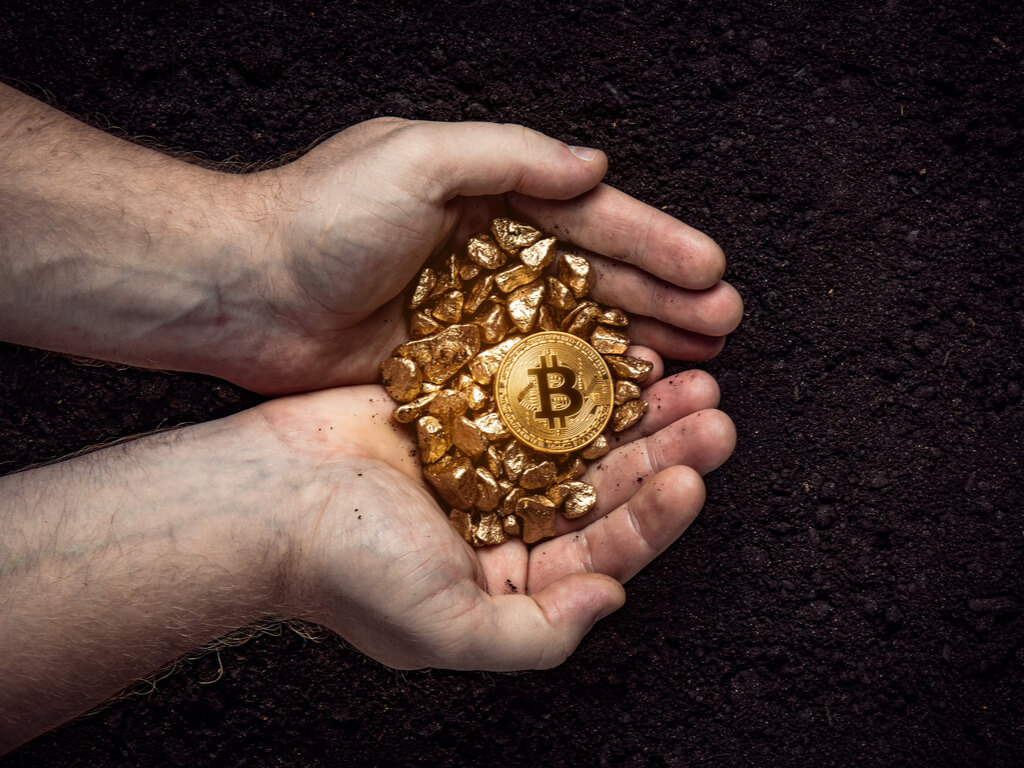
Much like any store of value (e.g. the dollar, land, time, etc.) Bitcoin’s value comes from the perceived use of the object in question (i.e. its real-world use case). Essentially, according to how much desire there is for an object, the more “value” it soaks up in comparison to other objects.
Accordingly, many people around the world view Bitcoin as both desirable and essential to use, which explains how Bitcoin has reached global recognition status to date. After Bitcoin’s partnership with Paypal, it now has a market cap that has overtaken that of Mastercard (Read More).
One real-world example of Bitcoin’s usefulness can be found in countries with governments that are, to put it crudely, “corrupt.”, with the people of these countries seeing a decentralised currency as an invaluable safe-haven to store wealth. With no authority and a simple transaction fee, it is understandable why many people in developing nations have a large degree of the population utilising the Bitcoin network. Also, unlike traditional currency systems Bitcoin does not require gatekeeper fees for storing your wealth (e.g. monthly service charges to keep your account open). Instead, the bitcoin network is free to use when storing value and only costs money when transferring value. For example, if you were to be paid only in Bitcoin from an employer, you as the recipient would incur no upfront costs.
Investors see Bitcoin as an attractive option due to its hedge against inflation (i.e. no money printing and limited supply), whereas, Technology Investors are excited for the future of Bitcoin, due to its founder developing what is conceptually known as Blockchain technology.
What is Blockchain Technology?
As previously mentioned Bitcoin can be thought of as a type of computer network that is continuously playing a large scale digital currency game. Bitcoin is one of many Blockchain networks, each with their own pre-programmed rules that help serve a real-world function.
A good way of conceptualising a Blockchain network is through the analogy of a train with multiple carriages. As trains are bounded by their rails (the rules of the Bitcoin network), they can only move in the direction of the rails. These rails are predetermined by the people and require a majority vote to change the direction of the train.
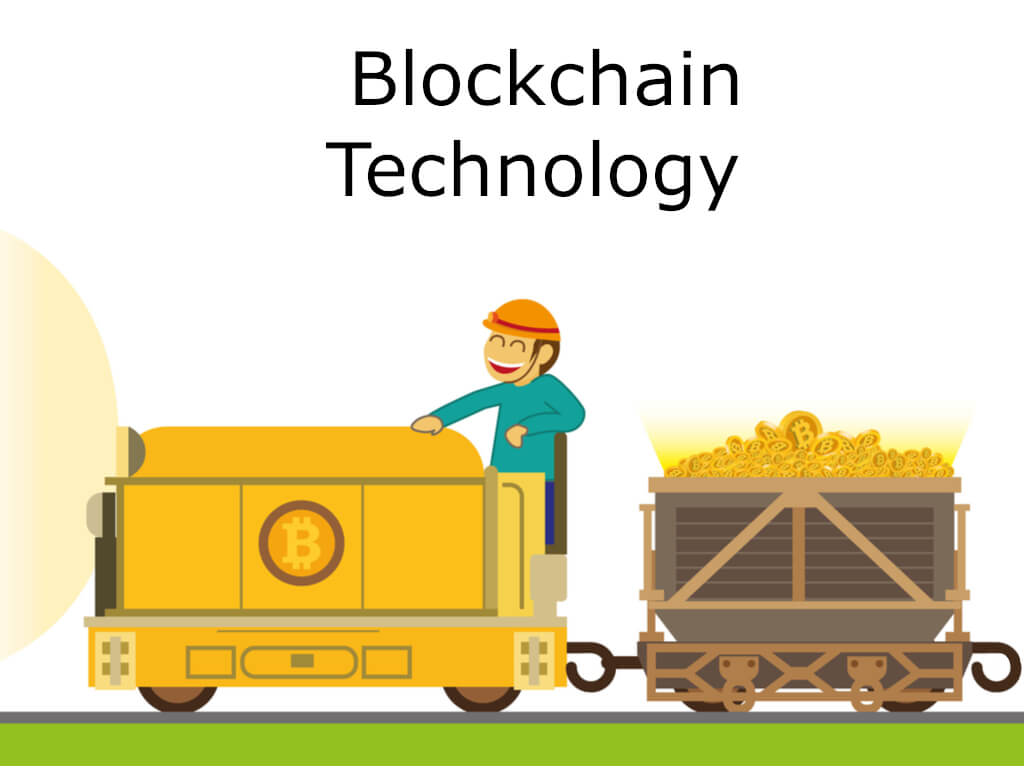
The word ‘Block’ in Blockchain refers to a chunk of digital information. In this train system a new carriage is added to the end of the train every 10 minutes. At the same time, the chain element of Blockchain referred to the fact that the train is both ever-growing in length and also each new carriage added to the end of this growing train is fixed in position once the network has confirmed that that particular carriage is indeed next in line. Beyond this analogy, the Blockchain is, in fact, a continuous transcript of who owns what at any given (i.e. a global Bitcoin ledger). A vast group of computers all keeping a log of when a coin moves from Person A to Person B.
For example, when person A givers Person B one Bitcoin, before they can use their newly-acquired currency, the network must confirm the next block to add to the end of the train before Person B gets to utilise that store of value. This “choosing” requires the second player to wait for the Bitcoin network of puzzle-solvers to find the next answer to a time-consuming puzzle and thus elect a new winner before the next carriage is added to the end. Due to the way the puzzle game works being a winner is exceptionally unpredictable for a per carriage case when trying to guess which puzzle solver will choose the next block to add to the end of the train.
Does Blockchain Technology Make Bitcoin a Secure currency?
There are two more concepts I am going to need to explain before you genuinely understand Bitcoin’s underlying technology and how it is indeed secure to use.
As mentioned before, there are two types of players on the Bitcoin network, and accordingly, two simultaneous games requiring different elements of security. In reality, these two security systems are inseparable.
I will first start by explaining the more commonly experienced user-to-user security of what a Cryptocurrency is, and how it is implicitly secure by design, before I delve into the puzzle solvers and how they enable decentralised finance while remaining utterly secure in this symbiotic system of two players.
What is a Cryptocurrency?
The prefix crypto- in Cryptocurrency “Secret money” is from a method known as Cryptography * “secret writing”* which is for protecting information on computer networks through ciphers (e.g. changing all A’s to B’s and C’s to D’s in a message), which encrypting the underlying message that only the person who has the decryption key can understand.
Using the Bitcoin network as an example to explain how cryptography is used to make a Cryptocurrency, first, we must understand that anyone on the Bitcoin network can interact with the network via a Bitcoin Wallet. Simply put, Bitcoin wallets are just like an ordinary leather wallet/purse that can be used to store value. In reality, these crypto-wallets act more like a bank account and are bound to the person who created them (generally they are on your phone or computer like a banking app).
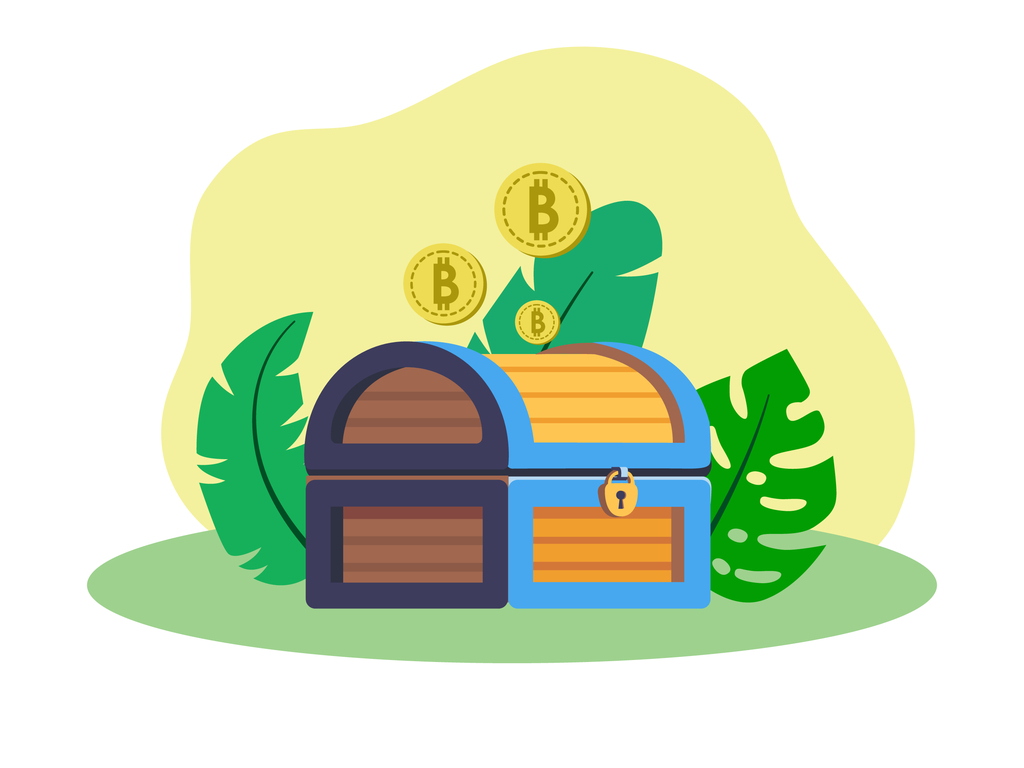
In the context of Bitcoin, I like to think of wallets as a pirate treasure chest with a big golden key stuck in the keyhole that everyone playing the game can turn and look inside if they desire; assuming they know where to find a particular chest in the first place. However, unlike a ‘regular’ pirate chest in which when opened, the value is obtained by removing what is inside, our Cryptocurrency-treasure-chest contains another lockbox inside. The second lockbox contains the real value of the pirate chest and requires a secret password/combination to unlock and thus withdraw from both of our chests. Typically, only the original owner should know the location of the secret key to their lockbox.
Another rule we must impose in this digital Bitcoin network is that anyone can also store anything in anyone’s chest; all they need is the location of the pirate chest as the network only focuses on transfers to validate who has what at any given time. I doubt you would complain if someone randomly sent you money! However, in order to send Bitcoin from your chest to someone else’s chest, the lockbox must be accessed at the same time as the chest — turning both keys at the same time. Therefore to send money across the Bitcoin network, you must know where the pirate chest is and where the secret key is to the lockbox within.
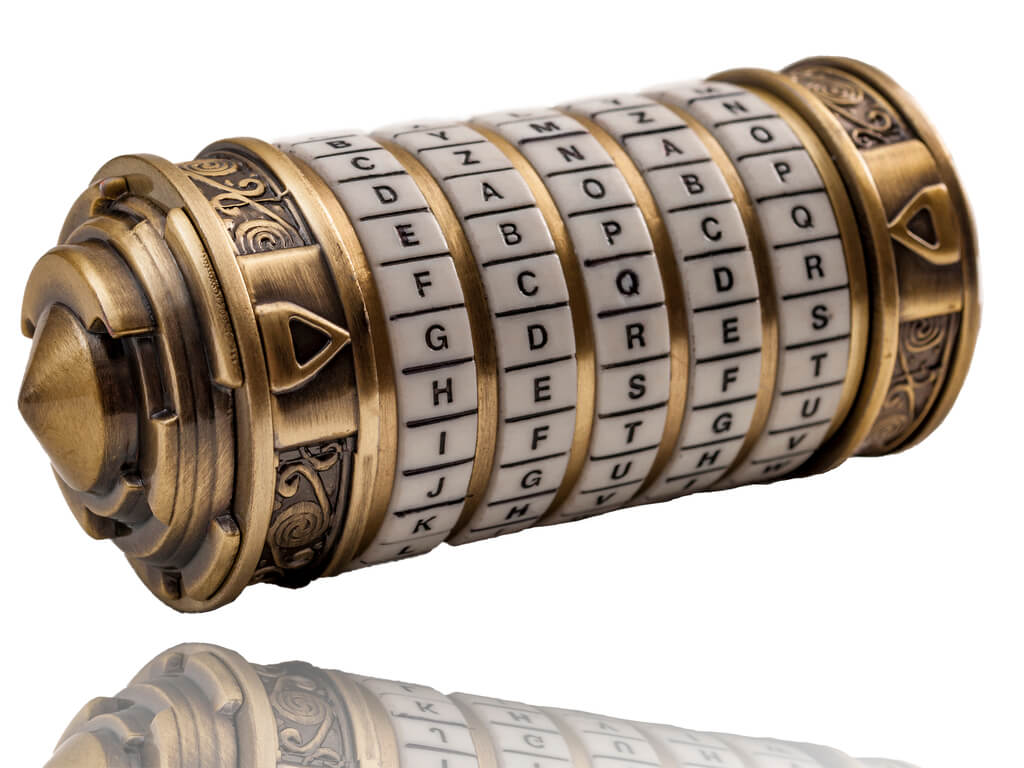
For example, if Sally wants to give Bob one Bitcoin, then Sally must request Bob’s pirate chest location (i.e. Bob’s Bitcoin wallet address). Let us assume Sally already knows Bob’s treasure chest location. After acquiring Bob’s address, Sally then lets the network know she wants to send one Bitcoin to Bob and is therefore required to validate she has her secret key to the lockbox. In our fictitious pirate chest example, this would be as simple as A.) knowing the right chest that contains the lockbox and B.) where the secret key is to open the said lockbox. In reality, this process is a lot more complicated due to no middle man existing to verify “Sally gave Bob 1 Bitcoin”. Accordingly, to write this ‘truth’ down as valid on the ever-going Bitcoin ledger one uses a digital signature/stamp to sign off on the transaction.
                   ,-.
                   `-'
                   /|\
 ,-----.            |
 |Sally|           / \
 `--+--'          Sally's Wallet
    |   - 1 BTC     |
    |-------------->|
    |               |
    |    + 1 BTC    |
    | <-----------  |
  ,-+-.            Bob's Wallet
  |Bob|            ,-.
  `---'            `-'
                   /|\
                    |
                   / \
With the above in mind, whether you are buying Bitcoin or any Cryptocurrency more broadly, what you are receiving is a stamp of approval from another user on the network (their digital signature — a verification process stating that Sally has her secret key without revealing it to the public).
In the above scenario, the digital signature is used to state that Sally’s lockbox now contains -1 of her previously owned Bitcoin funds, whereas bob owns + 1 Bitcoin. While all this may sound overly complicated, it is no different from signing a cheque. Remember, Sally is the only person who knows both the location of her chest and the secret lockbox key location/code. As a result of this combination of anonymity of who owns what chest and only one person knowing the inside lockboxes code is used to generate this digital stamp and thus proof of transfer validity.
However, you never really interact with your secret key, rather like internet banking, this is all done behind closed doors for security reasons and your convenience. Instead, with modern cryptocurrency platforms like Binance to send funds from your chest and lockbox, you just need to prove you are who you are via a user name, password, and other forms of authentication. By proxy of these verification checks of identity, modern platforms do the stamping for you and store all the secret key stuff for you on their secure database; as they securely hold your keys for you, at a small extra cost per transfer.
Alternatively, if you genuinely want to cut out the middle man and choose to store your secret keys on a hardware wallet (i.e. a glorified USB with a Bitcoin address that holds your secret keys offline), then you “technically” own a somewhat tangible form of Bitcoin as nobody can use your secret key unless they physically get hold of the USB, and also your login information to take your secret keys off these kinds of devices. Usually, this extra information is an email address, password, physical proof you have the device, and its plugged into a computer (e.g. pressing two buttons on the USB at the same time). I use the ledger hardware wallet (Click Here)
Where Do I buy Bitcoin from?
Bitcoin is most commonly bought via Cryptocurrency supporting applications/exchanges. Purchasing Bitcoin on these platforms is no different from owning stocks or holding money in a bank account.
Below are two of the most reputable Cryptocurrency exchanges that I recommend and use:
- Coinbase - (Click Here)
- Arguably the most user-friendly platform. Although the purchase fees are high, the focus of this platform is security which allows people to keep their digital currency in an easy to use online wallet. Coinbase is so confident in their security they ensure that all digital wallets are backed by insurance if anything were to occur.
- Binance - (Click Here)
- The exchange with the most amount of cryptocurrencies in south-east Asia, allowing you to swap your Bitcoin with almost any other reputable coin on the market. As an Australian, I use this exchange to buy other Cryptocurrencies due to Binance’s solid reputation and AUD pairings with most popular coins.
When you finally ‘own’ Bitcoin, what you are actually acquiring is a ledger that can only be stamped by the sender (e.g. a Cryptocurrency app), stating that they approved the transfer from their wallet to yours. This digital signature and constant account keeping is shared by everyone on the network all the time, a global bitcoin ledger of how much money everyone has that is broadcast and updated every 10 minutes by the puzzle solvers.
Some of you may be asking yourselves “If everyone is broadcasting and comparing their ledger, who’s to say what goes at any given time?”.
Therefore, I will now explain the role of the puzzle solvers or what is more commonly known as Bitcoin mining in more detail.
What is Bitcoin Mining?
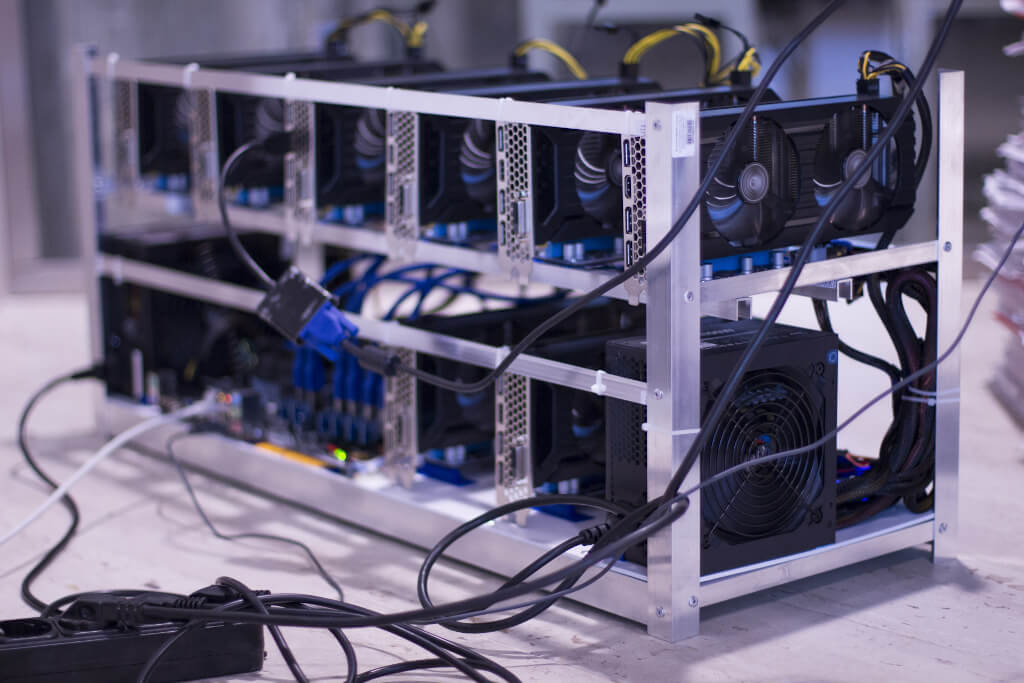
As previously mentioned, playing this Bitcoin mining game relies on computing power which is used to choose whose block is added to the end of the chain. Bitcoin miners are utilising their computing power ($ KW/per hour) in order to solve an arbitrary puzzle proposed by the network, in which, if you are the winner, and solve the puzzle the quickest, you are awarded a sum of bitcoin for adding the next block onto the end of the chain. The task the miners perform is quite literally a scalable number guessing game, in which the network strives for the puzzle solution time to be roughly 10 minutes. Every two weeks the difficulty of the puzzles tackled is adjusted to combat technological advancements in computing power, and more miners joining/leaving the network (more people = more guess per second, and quicker computers = more guess per second). How the network does this is quite simple, it averages the past two weeks of puzzle solutions, and either make the puzzle harder or easier to solve based on how far the average solution time strays from that 10-minute sweet spot. In essence, the network makes a huge number that is the answer to the next block, either slightly longer or shorter depending on the aforementioned conditions of the network.
Usually, miners form groups and work together to try and solve the same puzzle together in what is known as a mining pool — a group of computers pointed at the puzzle that splits the bounty.
What is Proof of Work
In the above system, a conglomerate of miners all have the same chance of adding the next block to the end of the chain and utilising computing power is known as a “Proof of Work” system (i.e. guessing the right answer to the puzzle and choosing the next chunk of information to be added to the ledger of ‘who owns what’).
An excellent way to understand a proof of work is to understand how to break and cheat the system!
In order to fraudulently change a block in the ever-growing Bitcoin ledger, precisely one that says Bob gave Sally 1 Bitcoin, rather than the other way around, Sally would seldomly need to accumulate more than 51% of all mining computing power on the Bitcoin network. Furthermore, Sally needs to continuously maintain this 51% majority lead to make sure that her Blockchain is the longest and quickest solution every 10 minutes, indefinitely.
Why indefinitely?
Well, every 10 minutes all miners playing the game are required to broadcast and compare who has the longest chain, with the longest chain deemed the most secure system at any given time (i.e. it is improbable for any miner/mining operation to own the majority of the world’s computing power). Accordingly, the train with the most carriages and thus most computational “work” is what the network takes as cold hard proof of which block is added to the ever-growing ledger of who owns what. Note, due to this proof of work system, the second that Sally loses the 51% majority of computing power, the next longest chain becomes the new authority in town and correctly adjusts Sally’s fraudulent ledger entry, thus giving Bob back his Bitcoin. In reality, it is easier to steal someone’s secret key than beat the proof of work system.
Properties of The Ever-Growing Bitcoin Ledger
Remember the Bitcoin rule that fights inflation? Only 21 million coins are in circulation at any given time, and due to the decentralised nature of the Bitcoin network, a ledger or the transaction history of who has transferred to whom in each block is continuously being recorded. The Blockchain element allows for unique identification of each Bitcoin (due to their permanency on the network), but it also allows for each coin to be tracked across the network (much like who has borrowed a library book).
Therefore each Bitcoin and its divisible Satoshi on the blockchain network are always being recorded when they change hands every 10 minutes, starting from the day of a Bitcoin’s conception (much like the serial code branded onto a gold bar).
Remember the train analogy? If you start at the beginning of the train and look inside every single carriage, and track the singular journey of wealth from the day a coin was born to date (the first person to transfer that value to the latest person to hold that value), you are acquiring the transaction history from the birth of a coin as it goes from wallet to wallet address.
How Can You Mine A Limited Supply of Bitcoin?
You may be asking yourself at this point:
“Birth of a bitcoin?”
“Aren’t all Bitcoins the same age?”
and “I thought there were only 21 million coins allowed to ever exist?”
Well, the quick and straightforward answer is Bitcoin is drip-fed into the network as part of the puzzle-solving game to help fight inflation.
During the early days of the Bitcoin network (2009), when each Bitcoin cost cents instead of todays thousdands of dollars per coin, miners playing the puzzle-solving game were rewarded a large sum of bitcoin by today’s standards, this reward is known as a Block reward (in 2020 the lucky miners gets on average 6.25 BTC per block).
What is a Block Reward?
The Block reward is a wrapped-up Bitcoin bounty so to speak, that not only constitutes the newly drip-fed reward of Bitcoin into the network but also an accumulation of transfer fees from all the senders that want to move their bitcoin from one wallet to another across the network. When a lucky miner playing the puzzle game wins, what they are doing is guessing a significantly longer number to a complex equation. The right answer not only grants you the block reward (i.e. money) but also the power to determine which transactions will be included in the next block. As an analogue to understand how a block reward is constructed between miners and senders, I like to think of this game as a futuristic human race trying to mine a Bitcoin asteroid belt continuously.
In this fictitious asteroid belt, each asteroid is an individual transaction floating around in space, all waiting for a lucky miner to scoop them up and haul them home on the next shipment back to earth (the next block in the chain). The miners’ space ship can only fit a certain amount of asteroids (the capacity of amalgamated transactions + their corresponding fees) on each trip back to earth. Therefore each miner is trying to maximise their yield based on their limited amount of cargo space (the network has a predetermined block size every miner must abide by when choosing how they will construct the next block in the chain). Remember it’s a long trip back home, and you want to make the trip worth it each time you get a full load. Accordingly, the Miners that guess the right number to solve the next block equation also get to choose which out of the Bitcoin asteroids they want to take back home to earth. They do this in such a way to gain the most significant yield possible in the least amount of space.
Therefore, this asteroid mining game is not only highly competitive for miners, but also for the senders, as the quicker you want to use your funds the greater the ratio of fees to asteroid size you must have. For example, as a sender, in order to be clumped-up and brought back to earth, one must be scooped-up in this winning miners yield. This process of being ‘scooped-up’ is not randomly determined per se; instead, miners prioritise senders which pay the most and also who help them reach a required block size (kind of like playing sender Lego or Tetris to ensure you can bring the most back with limited cargo space). In addition to all the Bitcoin asteroids that fill our cargo bay, at the core of our asteroid yield is a fixed sum of newly mined pure Bitcoin, the last part of the block reward (6.25 BTC as of 2020).
When you send bitcoin from one person to another, you can specify how much you are willing to spend on the transaction fee (most online platforms automate this part). The more you put forth, the higher the probability you will be placed on the next blockchain shipment back to earth by the winning miner. However, in this auction-esque system, the queue order back to earth is also determined by how long you have been floating out in space, with older transactions getting priority over newer ones of equal size.
Therefore as a sender who cares less about going back to earth right away, you are willing to pay less and as a result, are required to wait longer before being placed in the next block. Accordingly, the flexibility and transfer speed of who is incorporated into each block is controlled by both players, with time, money, and size as the trifecta of where you fall in the queue.
Every four years (~210,000 blocks mined, 1 per 10 minutes), the ‘mining’ element of the block reward is programmed to be halved (50 in 2009 to 6.25 in 2020). Once all 21 million coins are in circulation miners will no longer receive new Bitcoin (it is estimated that the last ‘new’ Bitcoin will be created in around 2140). Rather, transaction fees will be the sole reward for miners that guess the right number to the equations.
Bitcoin = Cryptography + Blockchain Technology
Not only does Blockchain technology and Cryptography inherently give each Bitcoin unique properties of security and permanency (such as coin A being older than that coin B, thus allowing for the ranking of coins by age) it also allows for Bitcoin movement to be tracked across all wallets in the Bitcoin network. However, without knowing who owns a particular wallet, each transaction is transparent yet anonymous at the same time, as you only know, who owns’ a particular wallet if they reveal their Bitcoin wallet address. Plus if you want to know what they have been up to on the network, you also need to know the identity of all other wallets on the network.
For example, in our above scenario, the Bitcoin going from Sally’s wallet to Bob’s wallet would read something like this:
-
1 BTC - from abc46EpuBvrzwDYdnDrQY8217TMBjKamX - Sally’s treasure chest address
-
1 BTC - to abcaVrevcfUzF2EhL5qRkx8Zhjij5sd7oE - Bob’s treasure chest address
Therefore, swapping contact information is no different from using an online banking service as most online platforms just allow you to use your email to represent you wallet address while all the nitty-gritty is done in the back end. However, if you are concerned about someone finding out what you are spending your Bitcoin on, assuming they know your wallet address, why not just jump into another coin? Bitcoin is one of the thousands of Cryptocurrencies, all with different real-world use cases.
Summary of what is Bitcoin
All in all, Bitcoin is the first large scale adoption of a cryptocurrency, the first horse out of the blockchain gates so to speak. One thing I forgot to mention earlier is that not only is Bitcoin the first digital Cryptocurrency-Blockchain aggregate, but its creator is also mostly unknown. Satoshi Nakamoto is the name used by the ‘presumed’ person who developed Bitcoin after the 2008 Global Financial Crisis (GFC). This anonymity and elusiveness of Bitcoin’s creator is what is favoured by many advocates, and is viewed as a currency owned by the people. Regardless of who invented Bitcoin, it has proven itself time and time again as a stable and attractive alternative to generic currencies, with its decentralisation, lack of inflation, and accessibility due to simple programmed rules of cryptography. Proof of work which drives this ecosystem is both secure and reliable, and not only runs the Bitcoin network but prevents fraud via its largely impenetrable castle design (i.e. in order to siege the castle you need to cross the mote, breach the walls to become and maintain king status.
Lastly, as miners, the goal is to make money. However, with the constant halving of the coin, fewer coins are mined, and power costs keep going up (in most countries). Many would see this as a negative, but as a result, many large scale mining operations are turning to greener solutions (e.g. solar, wind, and more power-efficient chips). Accordingly, the renewal energy industry and Cryptocurrency are striving for a cleaner and more accessible future, keeping costs low, with decentralisation as a priority and mass adoption becoming more accessible each and every day.
Thank you for your time. I hope this blog has helped you understand what Bitcoin is, what Cryptocurrencies are, and how Blockchain networks enable all of the above in our modern world 😊.
The information on this website is for general information only.
It should not be taken as constituting professional advice from the website owner
Please donate if you enjoyed the content
BTC = 32QCowhefyQsPTaw7kTqC1EdghUziU6sUb